


Following test repository best practices from day one is not optional work, it is the foundation that makes everything else in your testing workflow actually function at scale, especially in fast-moving Jira-integrated environments where AI tools are raising the bar for what quality looks like.
Key Takeaways
| Point | Details |
|---|---|
| Organize by journeys or modules | Structure your test repository around user journeys or product features to improve clarity and scalability. |
| Standardize naming and traceability | Use consistent test case names and link tests to requirements for auditability and impact analysis. |
| Synchronize tests and code | Adopt branching strategies like trunk-based development to prevent test-code drift and automation failures. |
| Leverage AI | AI tools to automate test creation, maintain traceability, test folders and identify flaky tests efficiently. |
| Regularly review and maintain | Conduct quarterly audits to retire obsolete tests and keep your test suite healthy and relevant. |
Organizing your test repository for clarity and scalability
To build an organized repository that supports efficient test management, start with how you structure test files and folders. The goal is a layout that any team member can navigate without a tour guide.
Structure your repository around user journeys or product modules, not arbitrary groupings. For example, folders like “checkout/, user_auth/, and search/immediately communicate what lives where.

Keep folder nesting shallow. Limiting folder depth to three or four levels and grouping test cases by product modules improves findability and maintainability in ways that deeper nesting never can. A path like auth/login/happy_path/ works. A path like auth/login/ui/web/chrome/v1/ is a warning sign.
Pro Tip: Pilot your chosen folder structure on a single product area, say the checkout flow, before rolling it out across the entire repository. What works for one module may need adjustment for another.
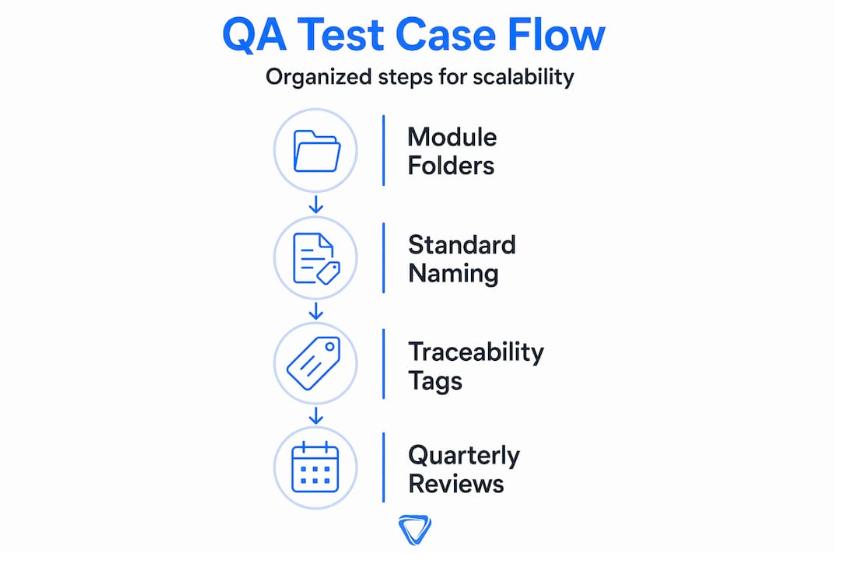
Traceability is not just a compliance checkbox. It tells you which tests cover which requirements, and when a requirement changes, which tests are affected. Linking test repositories bidirectionally to requirements with tags and traceability is critical for proving 100% coverage in agile workflows. Without it, you are guessing at risk.
Use labels to classify tests beyond naming alone. Tags like smoke, regression, and critical-path let you build dynamic test runs without manual curation. Combined with test case management optimization practices inside Jira, tagged suites can be triggered automatically based on PR scope, sprint context, or release stage.
Pro Tip: Schedule a quarterly review to retire obsolete test cases. Tests that cover removed features or deprecated flows add noise, slow down runs, and erode team confidence in the suite.

Applying AI to enhance repository management and collaboration
Beyond traditional best practices, integrating AI-powered tools like Vansah within Jira creates a smarter, more collaborative testing environment. The difference is not incremental it changes the economics of test management entirely.
Vansah auto-creates tests from new sprint features, automates traceability, and provides bottleneck reporting, solving the scale challenges that manual linking and coverage proof create. When a developer writes a user story, Vansah can analyze its acceptance criteria and generate structured test cases in seconds, keeping your repository aligned with development without adding to anyone’s workload.
Here is how manual processes compare to AI-powered ones across the dimensions that matter most:
| Dimension | Manual process | Vansah AI-powered process |
|---|---|---|
| Test case creation | Hours per sprint | Seconds per user story |
| Traceability linking | Error-prone, manual | Automated, bidirectional |
| Flaky test detection | Reactive, after failures | Proactive, before release |
| Coverage reporting | Static snapshots | Real-time dashboards |
| Developer feedback loop | End of sprint | Per pull request |
Explore Vansah AI testing to see how these capabilities work natively inside Jira. The platform analyzes sprint stories, generates test cases with proper structure, and links them back to requirements without manual overhead. For teams optimizing test cases with AI, the reduction in repetitive work is immediate and measurable.
Boost your Jira test repository with Vansah AI-powered management
If you are ready to put these best practices and AI capabilities into action, Vansah offers powerful solutions designed specifically for Jira teams. Vansah AI for Testing auto-generates structured test cases directly from your Jira sprint stories, maintaining repository alignment with every development cycle without manual effort. Automated traceability links every test to its requirement, and real-time dashboards surface bottlenecks and flaky tests before they reach production. Vansah runs inside Jira natively, so there are no duplicate issues, no switching between tools, and no context lost. Whether your team needs test management for Jira at sprint level or continuous testing across a DevOps pipeline, Vansah scales with you. Start your free trial and see the difference clean, AI-powered test management makes to release quality and team confidence.
Frequently asked questions
What is the best way to organize a test repository?
Organize tests by user journeys or product modules with shallow folder nesting (max three levels), include a shared common/ folder for reusable components, and centralize configurations for clarity and scalability. Organizing by user journeys with reusable component folders reduces clutter and supports scalable automation.
How does traceability improve test management?
Traceability links tests directly to requirements and defects, enabling proof of coverage, compliance auditing, and faster impact analysis when code changes. Traceability is non-negotiable for proving coverage and assessing change impact at scale.
Why is AI integration important for test repositories in Jira?
AI automates test creation from user stories, maintains traceability without manual effort, identifies flaky tests early, and delivers faster feedback loops than manual management can. Jira AI auto-creates tests from sprint features and automates traceability, solving the scale challenges that grow with every release.
What branching strategy works best for syncing tests with code?
Trunk-based development with frequent merges and metadata tags keeps tests and code aligned and reduces automation failures caused by drift. Trunk-based branching aligns tests with code changes within days, preventing 60% of automation failures.
How often should test repositories be reviewed or cleaned up?
Quarterly audits are the practical minimum: retire obsolete tests, refactor brittle ones, and verify that coverage still reflects current product functionality. Periodic reviews every quarter keep test suites aligned to what the product actually does today.